Monday, June 2, 2014

Mapping Out Your Summer Plan

WRITING TIP

Summer energizes me to come out of winter hibernation and take on a project. Maybe it can do the same for you and your writing project.
All set for a summer project

You may be asking yourself: Is it too late? Can I do it? 

Here are the answers: No. Yes. No, it is not too late. Yes, you can do it. And, I have the proof.

Here are memoirs by two women who were members of my life story writing group. I am taking no credit for the completion of their books -- just making the point that these are women I know, women you could know or be.

Both women were in their eighties when they finished and self published their books. The books might eventually reach a wide readership, but they were written to inform and inspire family and friends.

Both are available as print copies but are more easily available as e-books.

The authors had help with the production including cover design, interior design, printing, and e-publication. But they didn't let the prospect of production daunt them. They did the work. They did the writing. Each woman told her story.

And I can tell you that Saturday I saw dramatic evidence of what a comfort and blessing a written life story can be to family and friends.

Saturday, May 31, 2014, the memorial service for Louise Redford, author of one of the two memoirs I am telling you about, was held. Portions of the book were read by several of her adult children who talked about their mother and how the book revealed deeper aspects of her true character of love, service, and quest for peace than even they had fully realized. And how they felt inspired in their own lives.


In the Arms of the River
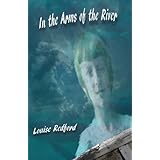

This is a dramatic memoir of growing up as a Mennonite under Soviet oppression in the 1930s, of escaping to Germany during World War II, and ultimately finding refuge in Canada and the US. Louise Redford (nee' Unger) was born in 1928 in the Mennonite colony of Einlage, near Zaporozhye, Ukraine. Her people were among the first to farm its rich soils when they settled there in the 18th century, but German pacifists had no place in the Soviet Union. Her own father was arrested and sent to work in Siberia, and never returned. Her community was destroyed by the Purge and the War, and few now remember it. Yet what she recalls today is not the fear and chaos, but her close-knit family and friends, and the beautiful Dniepr River, their playground and their haven. It's a story of bright memories in the midst of dark chapters of modern history.


My Journey in Faith
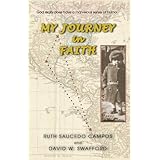

Ruth Saucedo Campos is a retired, award-winning school teacher from Kansas City, Kansas. As one of three U.S.-born daughters of Mexican immigrants, she endured the Jim Crow era during the 1930s and 1940s and struggled to find her way in a greater society that did not care. Only after accepting her father’s advice ("Put the Church first always!") did she begin her journey toward self-discovery—and recognize her mystical connection to God. Traveling to Lima, Peru as a Papal volunteer in 1960, she discovered her true place—in the classroom. As a missionary, she gave aid to the poorest of the poor and fell in love with teaching. Through the years she would travel to Mexico and Spain as well, growing to deeply appreciate her Hispanic roots and people of all cultures. Once back home, Ruth finished her education and accepted a job as a high school Spanish teacher in her childhood barrio. She taught for many years, earning numerous accolades for the exceptional ways she gave of herself. Outside the classroom she gave time and energy to local charities and independently led cultural exchange groups to Mexico. Upon her retirement from Sumner Academy, she was not quite finished teaching. She spent the next ten years doing the same as she had done when she first began—by teaching catechism classes in her local parish. In this remarkable and inspiring memoir, Ruth's undying faith and spirit come shining through for all to appreciate.

LAUNCHING PAD

This week study the blurbs above that describe each book. Rewrite one or both of the blurbs inserting your own information.

For example, I might copy the description of Louise Redford's book and write: This is a dramatic memoir of growing up in southwest Oklahoma in the 1940s and 1950s and finding refuge in the loving compassion of a Southern Baptist church. Carol Newman (nee' Allison) was born in 1942. Her people were among the first to receive Land Grants when Indian Territory became the state of Oklahoma. 

You get the idea. You could do the same thing with the description of Ruth Campos' book.

It is not cheating or copying or plagiarism. It is a way to get started thinking about the shape and form of the story you want to write. It is practice which may be discarded or may even find its way to the back of the book you write.


CHOCOLATE INKWELL Today's recipe is from www.allrecipes.com, but it is a variation of a recipe I first heard about from my friend, Terri-Lynn, who frequently entertains her friends and family with her excellent cooking.

Strawberry Cheesecake Bites Recipe
Photo courtesy of www.allrecipes.com
In this case the words are better than this picture

Chocolate Strawberry Cheesecake Bites 

Directions (Note: read through the directions first and then figure out your own simpler method.)
  1. Line a baking sheet with waxed paper.
  2. Beat together the cream cheese, confectioners' sugar, and vanilla extract in a bowl until smooth.
  3. Spoon the mixture into a piping bag fitted with a large round tip. (OR use a plastic sandwich bag with the top of one corner cut off.)
  4. With a sharp paring knife, cut a cone shape out of the top of each strawberry to leave a small hollow. (OR simply cut an X in the top of the strawberry and smoosh your piping point into it.)
  5. Pipe about 1 tablespoon of the cream cheese filling into each strawberry, making sure that the filling overflows a bit out of the top of the strawberry.
  6. Place the graham cracker crumbs into a shallow bowl. Dip the filled side of the strawberry into the graham cracker crumbs, coating the exposed filling with crumbs.
  7. Melt the chocolate and canola oil in a microwave-safe glass or ceramic bowl in 30-second intervals, stirring after each interval, until warm and smooth, 1 to 3 minutes (depending on your microwave).
  8. Dip the unfilled ends of the strawberries into the melted chocolate and place on the prepared baking sheet; refrigerate until set.


For more memoir writing tips and answers to your memoir and life story writing questions, go to www.angelinyourinkwell.com 


All rights reserved 2014 There's An Angel In Your Inkwell®

Monday, April 21, 2014

Get to First Base with Your Writing

STYLE TIP

Today's post is a Style Tip I wrote several years ago for the Heart of America Christian Writers Network newsletter.

Remember that old baseball comedy routine, “Who’s On First?” The confusion centered on a player named Who. 

“Who’s on first?” the comedian asks. “Who,” answers the second actor. From there the conversation circled endlessly.

Maybe you get the same feeling when you try to decide whether to use which or that.

According to The Chicago Manual of Style, this is the rule: use which to set off nonrestrictive clauses; use that to introduce restrictive clauses.

Oh yeah, now you get it – if only you knew what a nonrestrictive clause is.

Fortunately, the big orange book of style goes on to explain that a restrictive clause is one that is necessary to the sentence; therefore, a nonrestrictive clause would be . . . You get the idea.

Still puzzled? Here are some CMS examples to illustrate the point more succinctly:


Pizza that’s less than an inch deep just isn’t Chicago style.

Pizza, which is a favorite among Chicagoans, can be either bad for you or good, depending on how much of it you eat.

Note that if you remove “that’s less than an inch deep” from the first sentence, it becomes inaccurate; i.e., it’s not true that “pizza just isn’t Chicago style.” The clause, then, is restrictive (necessary) to the sentence; therefore “that” is correct.

If, however, you take out the clause “which is a favorite among Chicagoans” from the second sentence, it still makes sense: i.e., pizza can be either bad for you or good, and whether or not it is a favorite among Chicagoans does not “restrict” this meaning; therefore the clause is nonrestrictive and should be introduced by “which” and set off by commas.

Or to put it another way – that which does not kill you, makes you a better writer.

Source: The chicago manual of style  - 15th edition


All rights reserved 2014 There's An Angel In Your Inkwell®

Tuesday, April 15, 2014

Take A Look

WRITING TIP

In the future, we may return to this topic but for now, here is the last tip about writing about difficult life experiences. This is a short one. 

Reflection. Write a sentence or paragraph about the event. Immediately, or later, read back over what you have written. Then write what I will call a "reflection." 


The reflection is just for you. It is not a part of your life story or memoir that will be published or shown to family. (Unless, of course, you decide to do so.)

Continue writing about the life event(s) and writing reflections until you feel comfortable and able to write daily. 

You might answer these questions:

How did the writing make you feel? 
What do you observe about the event?
What thread of continuity do you find between this event and previous events?
What did you learn from writing about the event?

This is a part of the therapeutic aspect of writing. Various studies have shown that writing is therapeutic, but some  found that the most benefit came from reflecting back on what had been written and writing about that, too. 

From time to time, review your reflective writing and see if it leads you to deeper writing or new insights.

If you do this, I think you will find yourself feeling stronger, braver, and more able to continue with the writing of your memoir or life.

If you have a desire to write about your life, it is too important to allow yourself to be distracted. 

LAUNCHING PAD

Return to a piece of writing. Read it. Write a reflection, using the questions above as a guide.

Chocolate Inkwell

Thank you to Vickie for sending me this recipe. When I saw the name, Peanut Butter Cups, I thought it was for something like a copy of candy peanut butter cups. Wow! Was I wrong.

Part of the reason I like this recipe is that it gives you an excuse to use cute little ramekins, and if you don't have any, which I don't, it is an excuse to go out and buy some. (Hello Marshall's.)

The source for the recipe is/www.bestyummyrecipes.com. It calls for specific brands, but, of course, I doubt they are necessary. Note, though, that the ingredient list does not include the ingredients on the cake mix -- which you will need.

Peanut Butter Cups


Peanut Butter Cups
Photo Courtesy of yummyrecipes.com
  • 8 (4 ounce) ramekins
  • 1 (15.25 ounce) Betty Crocker Devil's Food cake mix (and ingredients called for on the package)
  • 1 cup creamy peanut butter
  • 1 1/2 cups powdered sugar
  • 1 cup dark or semi-sweet chocolate chips
  1. Preheat oven to 350 degrees and spray ramekins with cooking spray.
  2. Prepare cake mix batter according to package directions.
  3. In a medium bowl, mix the peanut butter and powdered sugar with a hand mixer or by hand until completely combined. Form 8 golf ball sized balls and set aside.
  4. Scoop 3-4 tablespoons of cake batter into each ramekin. Place peanut butter ball in the center of the cake batter in each ramekin. Cover the peanut butter ball with 1-2 tablespoons of cake batter.
  5. Bake peanut butter cups for 16-19 minutes or until top is set and bounces back.
  6. Top each cake with 1 Tablespoon of chocolate chips and let melt. You can spread them once they melt or just leave them as is.


Check out http://www.angelinyourinkwell.com/index.php for life story writing questions and answers. 
And, while you're there, if you like cute greeting cards, click on Buy Here.


Mirror photo by Carol Newman
All rights reserved 2014 There's An Angel In Your Inkwell®


Monday, April 7, 2014

You Are Not a Whiner


WRITING TIP

Soon we will move on to other topics, but for now, the subject is still writing about painful or difficult life events. 

Maybe one of the things holding you back from writing is that you don't want to sound as if you are whining or complaining. Here is a simple way to avoid that: write about what sustained you during your time of trial.

(Were any of you actually on trial? Hey, we want to hear about that. Sorry. Just kidding.)

What helped get you through your difficult time?

Did you spend time in nature? Solitude?

 Did a friend help you? Family? What did the person do? What was your relationship? How did it help? Describe the person. How did you meet?

 Did you change your lifestyle? Begin a healthy diet? Shuck the coat, tie, and cube for more meaningful work?
 Did you garden? Did someone give you flowers?
 Was there a pet who helped you?
 Music is healing. Were you helped by playing or listening to music?

Include yourself in the stories, of course, but including other people and other things can make the writing bearable and honest and powerful. 

LAUNCHING PAD

Have you written a sentence every day? Keep going. If you haven't, start today. For example: 

The first person to call me was Maria.

Or - Every morning Snowball tugged on my covers, eager to start the day. She needed me. I needed her.

Or - I quit shaving, changed my suit coat for a jean jacket, and started growing carrots.

You get the idea. 

Next post, a most important point, and then we will move on to another topic.


Chocolate Inkwell 

Looking online for a waffle cookie recipe I had heard about, I came across this one called Boot Tracks. How cute is that! Cocoa powder. And you are set. The recipe calls for whole wheat pastry flour. I think I would just give plain old flour a try if that is all I had on hand -- and it is. Much as I love coffee, I would probably opt out of the espresso powder too. Straight chocolate. That's for me. I'll have my coffee on the side. 

boot tracks
Photo and Recipe Courtesy of www.delish.com

Boot Tracks Cookies

Ingredients

  • 1/2 cup(s) salted butter
  • 2/3 cup(s) granulated sugar
  • 2 large eggs
  • 1 teaspoon(s) vanilla extract
  • 1 cup(s) whole-wheat pastry flour
  • 6 tablespoon(s) cocoa powder
  • 2 tablespoon(s) canola oil
  • 1/2 teaspoon(s) espresso powder, (optional)
  • Confectioner's sugar, for dusting

Directions
  1. Preheat a nonstick (not Belgian) waffle iron.
  2. Cream butter and sugar in a medium bowl. Beat in eggs and vanilla. Add flour, cocoa powder, oil and espresso powder (if using). Beat until thoroughly combined.
  3. Drop the batter by rounded teaspoonfuls about 1 inch apart onto the preheated ungreased waffle iron. (To avoid burnt fingers, use two spoons, one to scoop and one to scrape dough onto the waffle iron.) Close and cook until the cookies are puffed and cooked through, 1 to 1 1/2 minutes. Waffle irons vary, so watch closely and dont let the cookies get too dark. Transfer to a wire rack to cool until just warm. Dust the cookies with confectioners sugar while still slightly warm (see Variations). Variations: Instead of confectioners sugar, drizzle cooled cookies with melted bittersweet and/or white chocolate. Or make a peppermint drizzle: Mix 1 cup confectioners sugar, 4 teaspoons water and 1/4 teaspoon peppermint extract; add natural green food coloring, if desired.

Thank you for your comments. I welcome questions or suggestions. 

You can Share this post on Facebook by scrolling to the bottom of the post and clicking on the little f  icon for Facebook. 

Or you can simply tell your writers group or forward the email notification I send you.

For more resources about memoir and life story writing , visit www.angelinyourinkwell.com.


All rights reserved 2014 There's An Angel In Your Inkwell® 
All photos are by Carol Newman unless otherwise noted. 

Monday, March 31, 2014

Write Like a Reporter

WRITING TIP

Recently we have been exploring how to go about writing about painful, embarrassing, agonizing, reprehensible, devastating or slightly unpleasant life experiences. I suggested you start with just one sentence. 

Maybe you are wondering with what sentence to start. Here is how to do it. Write like a reporter. . 


LAUNCHING PAD

Here are some examples:

Write one sentence about what happened. The doorbell rang at midnight.

Write one sentence about a person in your story. My mother-in-law's teeth were stained from drinking well water as a child.

Write one sentence about where you were. I awoke in my bed with a start to feel a hand gripping my throat.

Write one sentence about what you saw. Blood seeped through his fingers where he had his hand over his mouth. 

Write one sentence about something you smelled. Burning flesh has a smell you never forget. 

Write one sentence about how your body reacted. The urine trickled down my leg and puddled on Grandma's linoleum floor.

Well, hey, if you weren't feeling depressed before, surely you are now. These are extreme examples. Yet, they are all things that writers I know have written about. Not only did the writers survive, they say they felt better for having done the writing.

The fact is, we all suffer pain in our lives. I sincerely hope yours is not the depth of pain that these sentences would indicate. Whether your pain is extreme or mild, you can write about it. Write like a reporter. Write the facts of the situation. One sentence at a time.

For more supremely useful information about memoir or life story writing, visit There's An Angel In Your Inkwell.

See you there. Meanwhile, feel free to post your comments or "one sentences" in the Comments section.

Scroll to the bottom of this post and click on the f Facebook icon to Share the blog on Facebook.

Chocolate Inkwell 

After writing something emotionally difficult, I know I am ready for some lighthearted chocolate. This is an easy-no-bake recipe that children can help make. Nothing puts life into perspective like children and chocolate.

This recipe is from ThinkArete.


No Bake S’more Cake
Photo courtesy of ThinkArete

No Bake S’more Cake

prep time: 15 minutes
chill time: 2-3 hours before serving 
servings: 20 
Ingredients:
  • 1 box graham crackers
  • 2 tubs of marshmallow creme 7 oz.  (Inexpensive generic brand is fine.)
  • 1 tub of cool whip (not frozen.. let sit out 15 minutes
  • 2 tsp. vanilla
  • 1 bag of semi sweet chocolate chips
  • 1 cup of heavy whipping cream
  • 1 tsp. salt
Step 1
Mix your marshmallow creme with the cool whip until smooth and creamy, use a hand mixer or counter mixer to mix the marshmallow and cool whip once it’s smooth and creamy add your vanilla and mix again.
Step2
Line the bottom of a 9 x 13 casserole baking dish with some graham crackers
 Spread one-third of the marshmallow whip evenly over the graham crackers
(repeat this step, cookies and marshmallow whip)
Step 3
Over medium low heat melt chips and cream until smooth, keep stirring and once the chocolate is completely melted and the 2 ingredients are well combined turn heat off. add salt and about every 5 minutes whisk the chocolate, for about 5-20 minutes
Step 4
Add it over the top and put uncovered in the freezer for about 30 minutes.
Removed from freezer covered and put in the fridge over night until ready to serve.


For more supremely useful information about memoir or life story writing, visit There's An Angel In Your Inkwell.

See you there. Meanwhile, feel free to post your comments or "one sentences" in the Comments section.

Scroll to the bottom of this post and click on the f Facebook icon to Share the blog on Facebook.

All rights reserved 2014 There's An Angel In Your Inkwell®